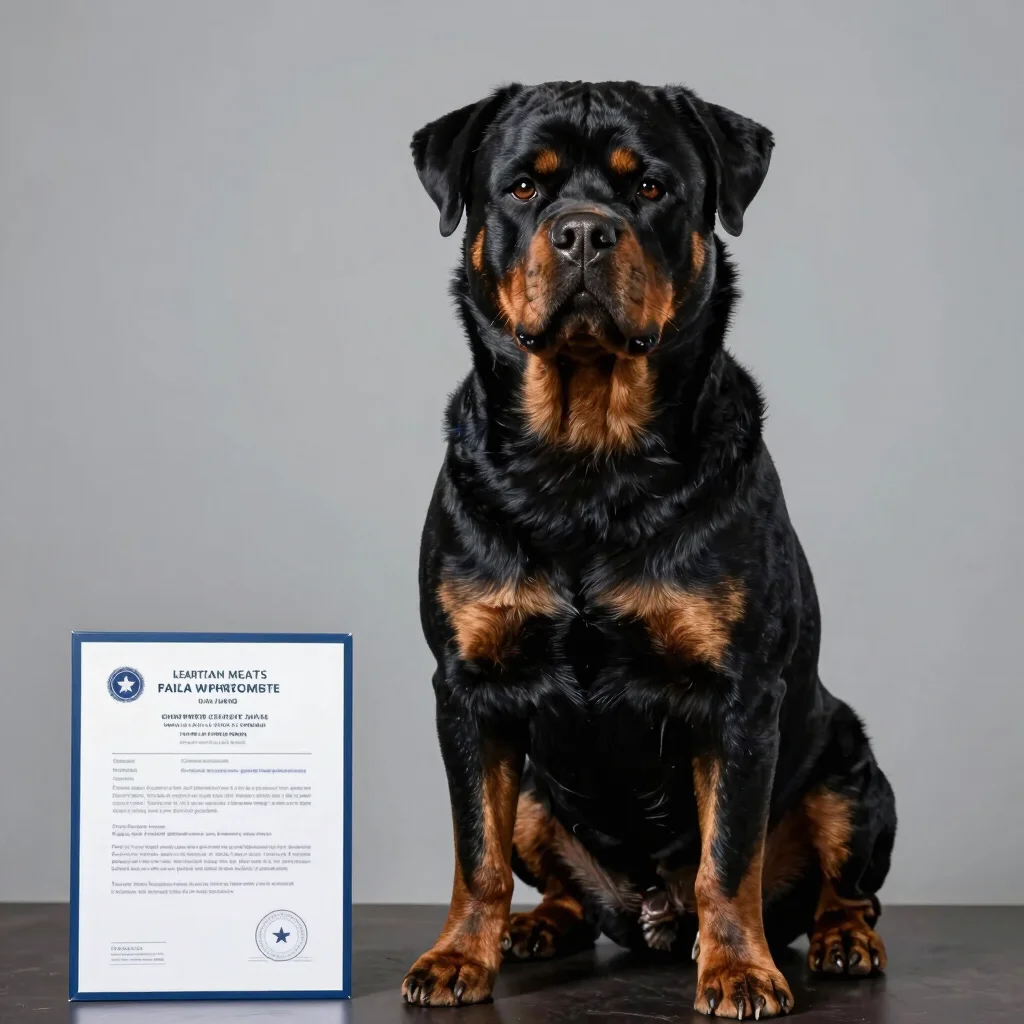
When evaluating a working breed as powerful and substantial as the Rottweiler, a standard wellness exam at a local veterinary clinic is only the first layer of assessment. Responsible breeding programs rely on rigorous, standardized diagnostic evaluations to ensure that sire and dam pass on optimal longevity, stamina, and freedom from hereditary conditions to their offspring.
The Difference Between Health Checks and Clearances
A standard health check confirms that a dog is free of immediate clinical illness, up to date on vaccinations, and maintained at an appropriate weight. However, hereditary disorders such as hip dysplasia or subaortic stenosis rarely manifest visually in young adult dogs. Diagnostic clearances from organizations like the Orthopedic Foundation for Animals involve specialized radiographic imaging and board-certified cardiology screenings that assess bone alignment and cardiovascular integrity beneath the surface.
Evaluating Joint Health in Heavy Working Breeds
Rottweilers are athletic, heavy-boned dogs engineered for work, tracking, and family companionship. Orthopedic testing evaluates hip sockets and elbow joints after full skeletal maturity at two years of age. By breeding exclusively from individuals certified with clear or excellent joint scores, breeders significantly reduce the risk of debilitating degenerative joint disease in future generations.
Integrating DNA Panel Testing into Breeding Decisions
Modern genetic testing allows breeders to screen for breed-specific DNA mutations such as Juvenile Laryngeal Paralysis and Polyneuropathy. Combining genetic panels with physical OFA evaluations ensures a complete biological profile for every dog in the program. Prospective owners should always request verified registry numbers rather than relying on verbal assurances.
Leave a Reply
You must be logged in to post a comment.